Posts

Hand injuries

Image
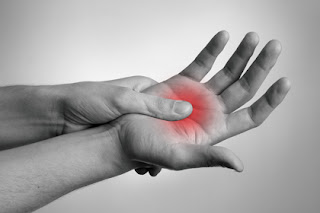
  Hand injuries  Hand function is essential for a good quality of life. We use our hands for small minute movements such as tying laces, brushing our teeth and holding cutlery. Hand injuries can occur from sport, gardening or even our day to day activities. It can be pulled in the wrong direction or be hit by an object and these little clues will help identify whether the injury is muscular, bone, ligament or tendon.  The first thing to ask yourself is can I move my hand fully in every direction even if it is a bit sore and is there an enormous amount of swelling or bruising? Initially icing can be very beneficial. Icing helps ease the pain and can limit the amount of swelling. Immobilising the injured area to begin with can also be helpful. This will allow the hand to heal in the correct position before you strengthen it to full function again and yes your hand may require strengthening! Just like any other injury in the body it is crucial to establish full range of mot...
Are you experiencing Hip Pain?

Image
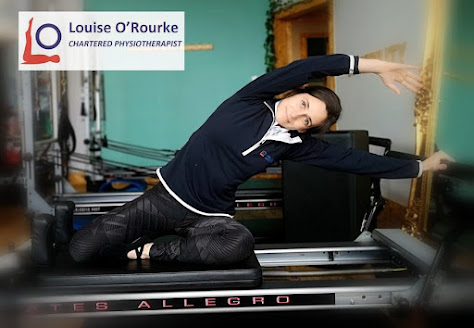
Are you experiencing hip pain which radiates down to your knee/leg? There is several factors that may be causing this, such as: Weak abdominal & pelvic floor muscles Poor glute activation Tight glutes, hip flexors Pelvic instability, posterior or anterior tilt Limited mobility in your hip, back, knee or ankle. Foot posture, pronated or supinated. Nerve, disc or facet joint irritation. How can Physio help you? To reduce your hip pain, we need to address all the areas contributing to your pain. Address tight muscles with physiotherapy, foam rolling, massage and stretching. Strengthen key lateral hip stabilising muscles, without causing compression on the lateral hip structures. Lose weight and reduce your abdominal girth to reduce load on your hip and associated muscles. Wear supportive footwear. Tips to change your postural habits Do not hang on one hip when standing, or carry a load such as a child on one hip. Do not lie on that side to sleep. When sleeping on the other side, ensur...

Are you suffering with Knee Pain?

Image
How we treat your knee pain?   Acute knee pain, we recommend ice, rest, compression & elevation. Rest from sporting activities to allow for appropriate healing. Ice therapy 10 minutes 3-4 times daily to help reduce pain. Compression to help reduce inflammation & support your knee. Elevation above your heart level. Referral to Physio is advised if the following day, you are limping or cant straighten or bend your knee fully. How Physio can help you? We release muscle tension & joint stiffness (massage, mobilisation, shockwave therapy, dry needling). We prescribe individualised mobility & strengthening exercises. Assess your gait. Provide education & advise. Exercises for strength, stability and control are essential in the prevention of reoccurring knee pain. You need to be able to walk pain free before attempting any jogging or running activities. We suggest light jogging when you knee is no longer painful to walk on. Then gradually return to sporting activities...

The Amazing Benefits of Radial Shockwave Therapy

Image
The Benefits of Radial Shockwave Therapy Have you heard? We are seeing really positive results with patients from Radial Shockwave Therapy in combination with Exercise Therapy. This Therapy is an effective treatment for soft tissue injuries, such as muscles & tendons in all our joints. How does Shockwave work? Our machine sends acoustic waves to stimulate blood vessels, nerves & tissues. Releases muscular tension. It speeds up healing rates & regenerates cartilage fibres. Feedback from our patients “my legs never felt looser in years” “the difference in my neck movements is unbelievable” “I can feel instant release in my foot pain” “my arm feels so much lighter & my wrist, there’s no pain” “my shoulders feel so much lighter” Conditions suitable for Shockwave Tennis or Golfers elbow Shoulder pain Plantar fasciitis Knee pain Tendinopathies Muscular pain Check out our mindbody app to book in with one of our Physio’s & release all that tension!

Tips to help with Hip Pain

Image
  Tips to help with Hip Pain To help reduce your hip pain, you need to address all the muscles & soft tissue structures that may be contributing to your pain. Release muscle tension with foam rolling, stretching, massage ball and heat therapy. Alternatively with physiotherapy treatments such as Dry Needling, Radial Shockwave Therapy, Soft Tissue Massage, Sports Massage & PNF stretches. Exercises to help strengthen the key stabilising muscles in your hips, such as glutes, piriformis, pelvic floor muscles & transverse abdominals. It is important to perform strengthening exercise 3 times per week in combination with daily aerobic exercise such as walking, swimming, or cycling activities. Think mind muscle connection when exercising.  Weight loss management to help reduce the pressure on your hip joints. Improve your postural habits. Avoid crossing your legs. Place a pillow in between your hips & slightly bent your knees when sleeping. Avoid lying on your painful h...

Tips to help with Neck pain

Image
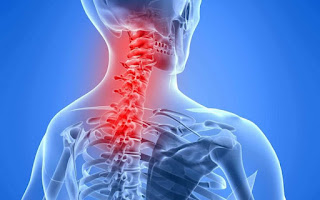
  Tips to help with Neck pain If you are struggling with neck pain, you are not alone, neck pain is surprisingly common. There are many factors associated with an increased risk of neck pain: poor ergonomics, increased sedentary behaviors, genetics & previous injury. Heat therapy helps reduce muscular tension. Cold packs help reduce inflammation. 10 minutes x 2-3 times daily.  Do some neck mobility exercises, slow controlled movements. Try this exercise to help relax your tight neck & upper back muscles. Bring your shoulder blades back & down gently.  Stretches for our pecs, traps, sub occipital muscles help relief headaches & upper neck tension. Hold for 5-10 minutes, repeat 3-4 times daily.  Strengthening exercises are key to support your neck muscles & help reduce pain. Deep neck flexors muscles get long & weak with poor or prolonged posture. It is crucial to strength these muscles to help support your neck again.  Suitable pillow that...

ROLFING

Image
R OLFING  W HAT IS IT ? Is a system of soft tissue manipulation,  with the objective of realigning the body  structurally and harmonizing its  fundamental movement patterns in relation  t o gravity .     R OLFING ¢  Gravity? Most human beings are  significantly out of alignment because  of the effects of gravity. Gravity shapes  body alignment. From birth until death  gravity is always working on our  musculo-skeletal system. Our bodies  get pulled into unnatural positions,  which result in chronic patterns of  tension, stress and pain these affect   both mind and body not only worsening  rigidity and inflexibility but also  affecting our state of mind (eg.  irritability) . We function better when  our bodies are aligned with the  gravitational field of the earth.  What happens and what’s involved? Over a series of sessions, both client  and Rolfer work together...

PELVIC GIRDLE PAIN (PGP)

⏩ PELVIC GIRDLE PAIN (PGP) ▶️Pain around the hips, or low back or over the pubic bone. This pain can spread done the front or back of the legs. ⛔Affects around 1 in 5 pregnant women. ▶️CAUSES? ✔Hormones related to pregnancy make the ligaments supporting the back and hip joints more stretchy. ✔Changes in the activity of muscles. ✔Changes to your posture. ✔Previous back, hip injuries. ▶️MANAGEMENT ✅Pain relieving methods, heat, tens machine. ✅Support belt. ✅Mobility, core stability, pelvic floor exercises. ✅Advice on posture. ✅Soft tissue massage. ▶️EXERCISES ON A GYM BALL ✔Sitting & exercising on a gym ball can help to improve your posture & activate your core stability. ✔The ball should be large enough to sit on with your legs bent at 90deg angle. ✅While sitting on the ball, get used to doing Pelvic floor exercises. ✅Pelvic tilting forward & backwards. ✅Pelvic circles. ⚠️Back pain & PGP can vary from mild, irritating pain to severe, disabling pain. Everyone is different...

Ergonomics working from home

Image
  Ergonomics working from home Poor ergonomics contributes to muscle strain, fatigue and muscle imbalances. Majority of muscle strains result from performing repetitive movements and holding sustained posture for prolonged periods of time. Healthy posture work habits prevent common neck, shoulder, back and wrist problems, while also increasing work productivity and mood. Tips for sitting in front of the computer: Keep your screen at eye level and  place your keyboard  close to your body. Sit in your chair with your back supported to avoid slumping. Make sure your feet are positioned on the ground. Use a foot stool if your feet don't reach the ground. If possible use a desk that can be converted to a standing desk to lessen the strain on your spine. Take standing or walking breaks every 30-45 minutes.  Rest your eyes by looking away from the computer and focusing on a distant object. Tips for talking on the phone: Avoid tilting your head and holding your pho...

ADVICE FOR GOLFERS RETURNING TO ACTIVITY

Image
  ADVICE FOR GOLFERS RETURNING TO ACTIVITY One week and counting until the return of golf. After such a long absence from sport, we predict to see an increase in aches and pains associated with doing too much too quickly.   Have you been hitting off hard mats? Or suddenly going from doing nothing for months to planning on hitting 300 balls a day for a week? Players need to develop a stable foundation and develop tissue resilience that can tolerate the forces being placed upon them. The golf swing requires a large mix of explosive power, strength, stability, flexibility and athletic ability.  Here is some education on three key areas to develop and maintain your mobility. This will help reduce injury potential and benefit your game! Thoracic spine (mid back) Golf requires a lot of rotation which is generated from the thoracic spine. If your thoracic spine is stiff, rotational forces will end up going elsewhere. Usually this is to the lumbar spine (low back) which is n...